


Dreaming of an adventure Europe trip where every city brings a new story, every landscape takes your breath away, and each moment feels memorable? Europe’s timeless charm and ever-evolving culture make it the top choice for explorers in 2026.
This guide is your trusted companion for planning Europe trips, offering the most current advice and expert insights. You’ll discover iconic destinations, hidden gems, essential planning steps, trending travel experiences, and practical tips for every traveler.
Get ready for exclusive trends, insider recommendations, and inspiring ideas that will spark your wanderlust. Start planning your european journey now for a trip you’ll never forget.
Why Europe Should Be Your 2026 Travel Destination
Europe has long been the heart of global exploration, captivating travelers with its endless variety of cultures, landscapes, and stories. In 2026, Europe trips promise an even more vibrant blend of old-world charm and modern adventure, making it the ultimate destination for those seeking both inspiration and discovery.
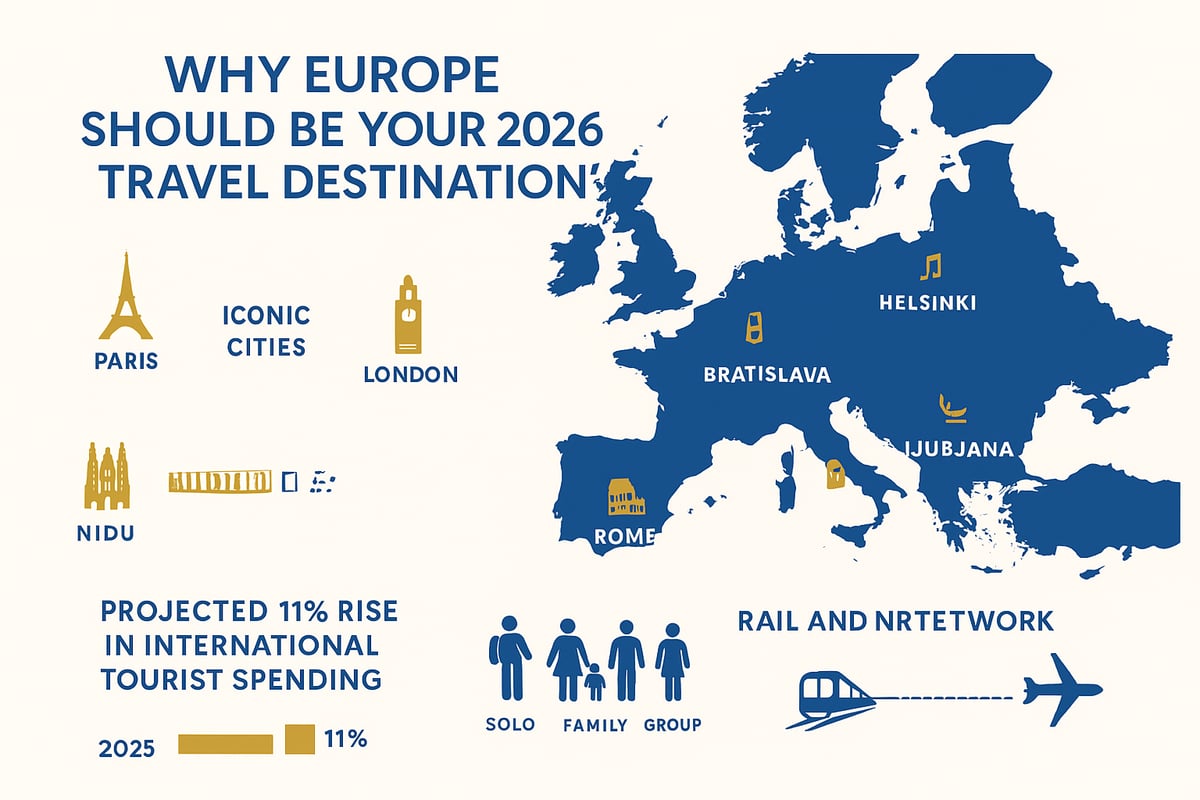
From the sun-drenched shores of the Mediterranean to the snow-capped peaks of the Alps, Europe trips offer an unmatched tapestry of experiences. Iconic cities like London, Paris, and Rome continue to shine, while hidden gems such as Bratislava, Helsinki, and Valletta invite you to step off the well-trodden path.
| Iconic Cities | Hidden Gems | Signature Experience |
|---|---|---|
| Paris | Bratislava | Eiffel Tower sunset |
| Rome | Valletta | Colosseum tour |
| London | Helsinki | Afternoon tea |
| Barcelona | Ljubljana | Tapas night |
The variety found in Europe trips is truly remarkable. Whether you dream of wandering through ancient ruins in Athens, sampling modern art in Berlin, or relaxing along the Amalfi Coast, there is something for every taste and interest.
Travel data for 2025 and 2026 shows that Europe trips are more popular than ever, with over 170 guided tours available for every kind of traveler. According to a recent report, international tourist spending in Europe is projected to rise by 11% in 2025, underscoring the region’s enduring appeal (International tourist spending in Europe up 11%). This surge reflects how Europe trips cater to solo adventurers, families, groups, and student travelers alike.
No matter your travel style, Europe trips deliver memorable moments. Imagine gliding through Venetian canals on a gondola, enjoying an authentic Irish music night in a lively pub, cruising along the blue waters of Santorini, or learning the art of Belgian chocolate making. The ease of multi-country travel, thanks to efficient rail and air networks, means you can experience diverse cultures and landscapes in a single journey.
For those seeking both bucket list icons and unique discoveries, Europe trips are a perfect fit. Seasonal festivals and special events add even more excitement in 2026, from major cultural anniversaries to exclusive regional celebrations. Whether you are a first-timer or a seasoned explorer, the continent’s mix of tradition and innovation ensures every trip is unforgettable.
With the world’s most celebrated cities, countless hidden treasures, and an ever-expanding range of experiences, Europe trips in 2026 are set to exceed every expectation. The time has never been better to plan, pack, and embark on an adventure you will remember for a lifetime.
Step-by-Step Guide to Planning Your Europe Trip in 2026
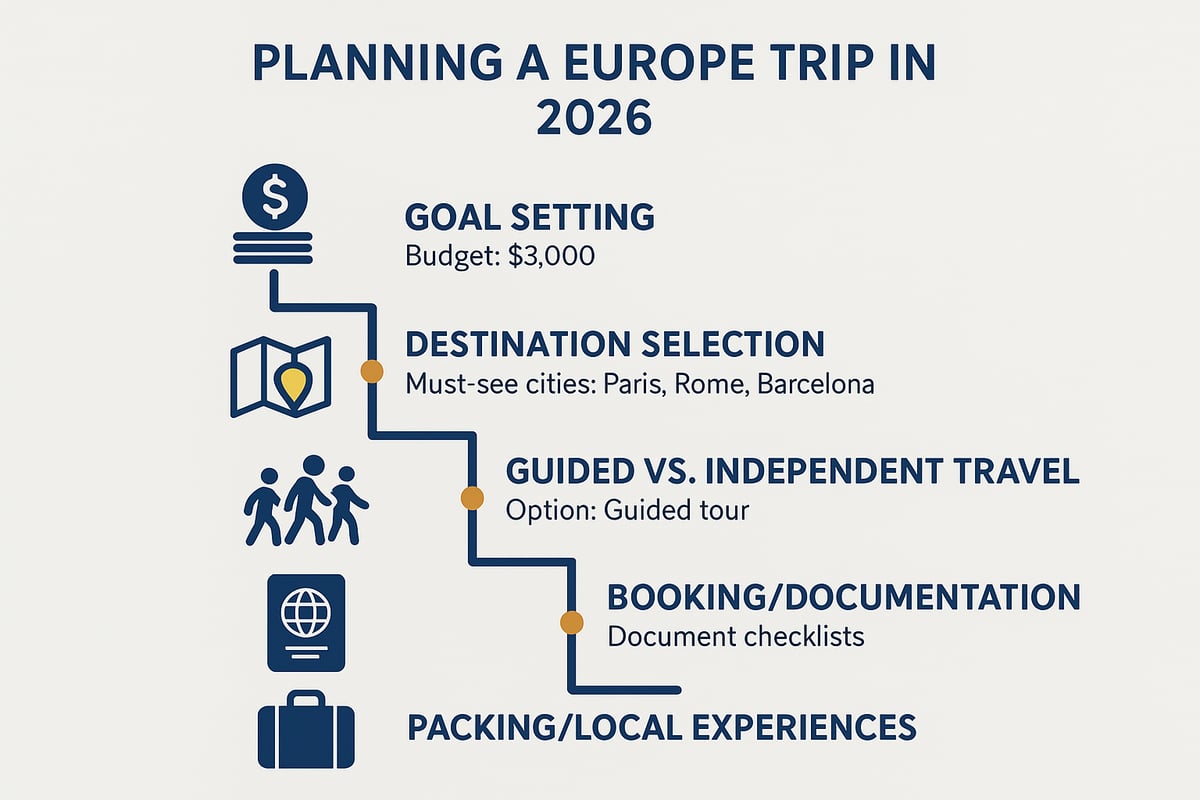
Planning unforgettable Europe trips in 2026 starts with a clear roadmap. Whether you dream of gondola rides in Venice or exploring hidden gems across the continent, following these essential steps will help you maximize your experience and avoid common pitfalls.
Step 1: Define Your Travel Goals and Budget
The first step in planning successful Europe trips is to clarify your travel style and budget. Are you seeking culture, adventure, relaxation, or culinary delights? Identifying your preferences helps narrow down the best itinerary.
Set a realistic budget. For 2026, competitor data suggests guided tours range from $2,000 to $4,500 or more. Consider factors like trip duration, 9 days, up to 13 days, or over two weeks, and the time of year. Traveling in the shoulder season often means better deals and fewer crowds.
Think about your group: solo, family, friends, or student travel. Some guided Europe trips have age requirements (18+ or 21+). If affordability is key, look into travel clubs or payment plans, which can start from as little as $5 a day.
For example, compare a 10-day Italy-France tour with a 14-day multi-country adventure. Starting early makes it easier to secure the best rates and itineraries for your Europe trips.
Step 2: Choose Destinations and Itineraries
Selecting where to go is at the heart of planning Europe trips. Start by exploring top countries such as Italy, the UK, France, Spain, Greece, Germany, and Austria. Consider whether you want a single-country deep dive or a multi-country journey, multi-country Europe trips are increasingly popular for 2026.
Must-see cities include London, Paris, Rome, Barcelona, Amsterdam, Vienna, and Athens. Regional experiences make each itinerary special, such as Irish castle stays, Greek island cruises, or scenic Alpine train rides.
Use curated itineraries from reputable tour providers for inspiration. For instance, a “Grand Tour of Europe” might cover six countries and ten cities in just over two weeks. There are more than 170 guided Europe trips available, giving you plenty of options.
A table can help compare sample itineraries:
| Tour Type | Duration | Countries | Highlights |
|---|---|---|---|
| Classic Italy & France | 10 days | 2 | Rome, Florence, Paris |
| Grand Europe Tour | 14 days | 4-6 | London, Paris, Rome, Vienna |
| Mediterranean Explorer | 12 days | 3 | Barcelona, Nice, Athens |
Researching destinations early ensures your Europe trips include both iconic sights and unique adventures.
Step 3: Decide on Guided Tours vs. Independent Travel
Choosing between guided group tours and independent travel is a pivotal step for Europe trips. Guided tours offer all-inclusive pricing, expert guides, and seamless logistics, making them ideal for first-timers or travelers seeking a stress-free experience.
Themed group adventures are on the rise, including solo traveler tours, influencer-hosted journeys, and “girls’ trips.” These often include accommodations, meals, transportation, and curated cultural activities, with transparent pricing and no hidden fees.
Independent travel, on the other hand, gives you control over the pace and route. If you enjoy flexibility, crafting your own itinerary may be appealing, but be prepared to handle logistics and bookings on your own.
For a deeper look at what all-inclusive packages offer, see the All-Inclusive Trips to Europe Guide.
For example, compare an all-inclusive 9-day Switzerland-Germany-Austria tour to a do-it-yourself itinerary. Guided Europe trips are especially attractive for those who value convenience and expert support.
Step 4: Book Early and Prepare Documentation
Booking early is crucial for Europe trips, especially for peak season or popular itineraries. Securing your spot six months ahead often means lower prices and better selection.
Make sure your passport is valid for at least six months beyond your return date. Check visa requirements for your itinerary, Schengen, UK, or other destinations. For 2026, all non-EU travelers should be aware of the new biometric Entry/Exit System (EES), set to be fully implemented by April 2026. Travel insurance is highly recommended for all Europe trips.
Tips for booking:
- Look for tours with flexible payment plans, sometimes as low as $99 down.
- Book flights and accommodations as soon as your itinerary is set.
- Double-check entry requirements for each country on your route.
Planning documentation in advance ensures your Europe trips go smoothly from start to finish.
Step 5: Pack and Plan for Local Experiences
Packing smartly is essential for Europe trips. Research the climate for your destinations, Mediterranean countries are warm in spring and summer, while Scandinavia may be cooler year-round.
Include essentials for cultural and outdoor activities: comfortable shoes, layers, adapters, and travel-sized toiletries. Pre-booking unique experiences like pasta-making in Rome, guided Versailles tours, or Irish music nights can make your trip memorable.
Travel apps help manage itineraries and provide local insights. For example, packing for a spring journey through Spain, France, and Italy requires both lightweight clothing and a rain jacket.
Hands-on activities and local experiences are more in demand than ever, so plan ahead to make the most of your Europe trips.
Top Destinations and Itineraries for 2026 Europe Trips
Europe trips in 2026 promise an unmatched blend of iconic highlights, emerging hotspots, and themed adventures. Travelers can choose between legendary cities, off-the-beaten-path gems, and curated itineraries that bring culture, cuisine, and community to the forefront. This section explores the most exciting destinations and itinerary trends for Europe trips, ensuring your journey is both memorable and perfectly tailored to your travel style.
Classic Destinations: Timeless Icons
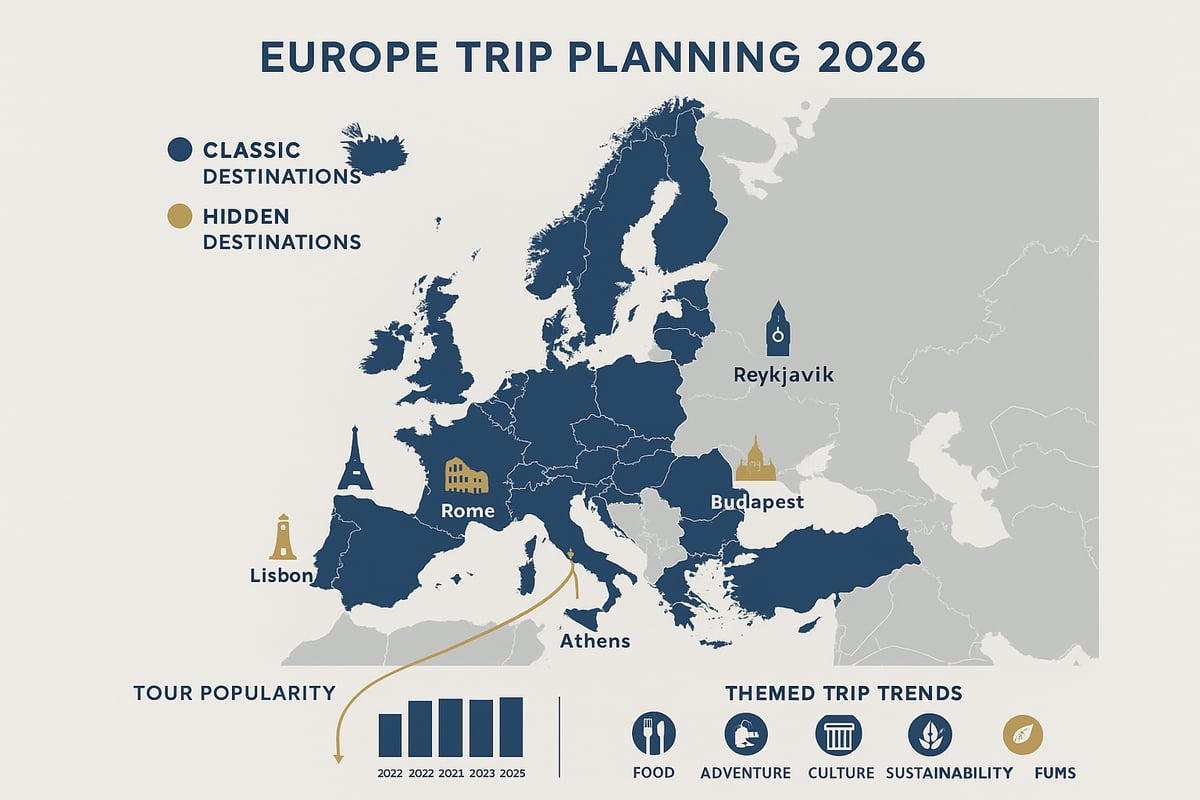
For many, Europe trips begin with the continent’s legendary cities and regions. Italy dazzles with Venice’s canals, Rome’s ancient ruins, Florence’s Renaissance art, and the sun-soaked Amalfi Coast. France calls visitors to Paris, the romantic French Riviera, and the storied Loire Valley, home to majestic châteaux and the iconic Eiffel Tower.
The United Kingdom offers the cosmopolitan energy of London, the medieval beauty of Edinburgh, and the dramatic landscapes of the Highlands. Spain entices with Barcelona’s Gaudí masterpieces, Madrid’s vibrant plazas, and Seville’s flamenco culture. Greece rounds out the list with Athens’ ancient wonders and the island allure of Santorini and Mykonos.
According to recent data, Italy, the UK, and France remain among the most-booked destinations. For a full overview of must-see cities and regions, the European Destinations Overview provides inspiration for planning Europe trips that cover the continent’s timeless icons.
Hidden Gems and Emerging Hotspots
Beyond the classics, Europe trips in 2026 are increasingly shaped by curiosity for hidden gems. Portugal’s Lisbon and Porto invite with historic charm, golden beaches, and world-class wine in the Algarve. Croatia’s medieval cities, like Dubrovnik and Split, offer Adriatic coastlines and UNESCO World Heritage sites.
Hungary’s Budapest impresses with its grand architecture, lively thermal baths, and dusk-lit Danube cruises. Iceland, with Reykjavik and the Golden Circle, delivers geysers, waterfalls, and a chance to witness the Northern Lights. Slovenia’s Lake Bled and Ljubljana attract travelers seeking fairytale scenery and outdoor adventure.
Tour providers are expanding itineraries to include Romania’s castles, Finland’s northern wilds, and the vibrant Baltics. These destinations give Europe trips a fresh perspective, letting travelers discover authentic culture and natural beauty.
Multi-Country Grand Tours
Multi-country itineraries are a defining trend for Europe trips in 2026. These journeys let you experience the continent’s diversity in one seamless adventure. Imagine a 16 to 18-day tour covering six countries and over ten cities, from London to Rome, or an Alps and Mediterranean route.
The benefits are clear: cultural variety, efficient travel through Europe’s extensive rail and air networks, and the simplicity of one booking covering all logistics. Many travelers are drawn to the ease and value of these grand tours, which remain among the top-selling options for 2025 and 2026.
A typical itinerary might include Paris, Amsterdam, Munich, Venice, and Barcelona, blending world-famous sights with unique local experiences. Multi-country Europe trips ensure you make the most of your time, with expert guides and carefully curated routes.
Themed and Experiential Trips
In 2026, themed Europe trips are more popular than ever. Food and wine journeys offer Italian cooking classes, French patisserie tours, and Portuguese wine tastings. Adventure seekers can hike the Swiss Alps, sail Greek waters, or explore Norwegian fjords.
History and art lovers are drawn to WWII landmarks in Germany, Renaissance masterpieces in Italy, and exclusive tours of the Louvre and Prado. Seasonal experiences like Christmas markets, summer festivals, and fall foliage tours add another layer of excitement.
Experiential itineraries often include hands-on workshops and cultural immersion, such as Irish music nights or Belgian chocolate making. These tailored Europe trips create lasting memories and deepen your connection to each destination.
Student, Solo, and Group Travel Trends
Europe trips are evolving to meet the needs of diverse travelers. Educational and student tours focus on hands-on learning and authentic cultural immersion, making travel both fun and enriching. Solo travel is on the rise, with dedicated group tours designed for solo adventurers seeking both independence and community.
Women’s groups and influencer-hosted trips provide safe, supportive environments and unique networking opportunities. Demand for group travel with built-in social experiences is growing, reflected in competitor offerings for students, solo travelers, and themed groups.
These trends ensure Europe trips are accessible, flexible, and tailored to a wide range of interests and backgrounds, making every traveler feel at home.
Sustainability and Local Impact
Responsible travel is a major focus for Europe trips in 2026. Eco-friendly options like scenic train journeys and sustainable accommodations are more widely available. Many tour providers now prioritize supporting local businesses and communities.
Travelers can join tours featuring local guides, farm-to-table dining, and artisan workshops, ensuring their trips have a positive impact. Sustainable Europe trips are increasingly sought after, as visitors look to minimize their footprint while maximizing authentic connections.
Choosing eco-conscious itineraries and supporting regional economies not only benefits the places you visit but also enriches your overall Europe trips experience.
Must-Have Experiences and Signature Activities in Europe
For those planning Europe trips in 2026, unforgettable experiences are at the heart of every journey. Whether you crave history, culture, adventure, or culinary delights, the continent offers an unparalleled range of signature activities that turn a trip into a lifelong memory.
Iconic European Experiences
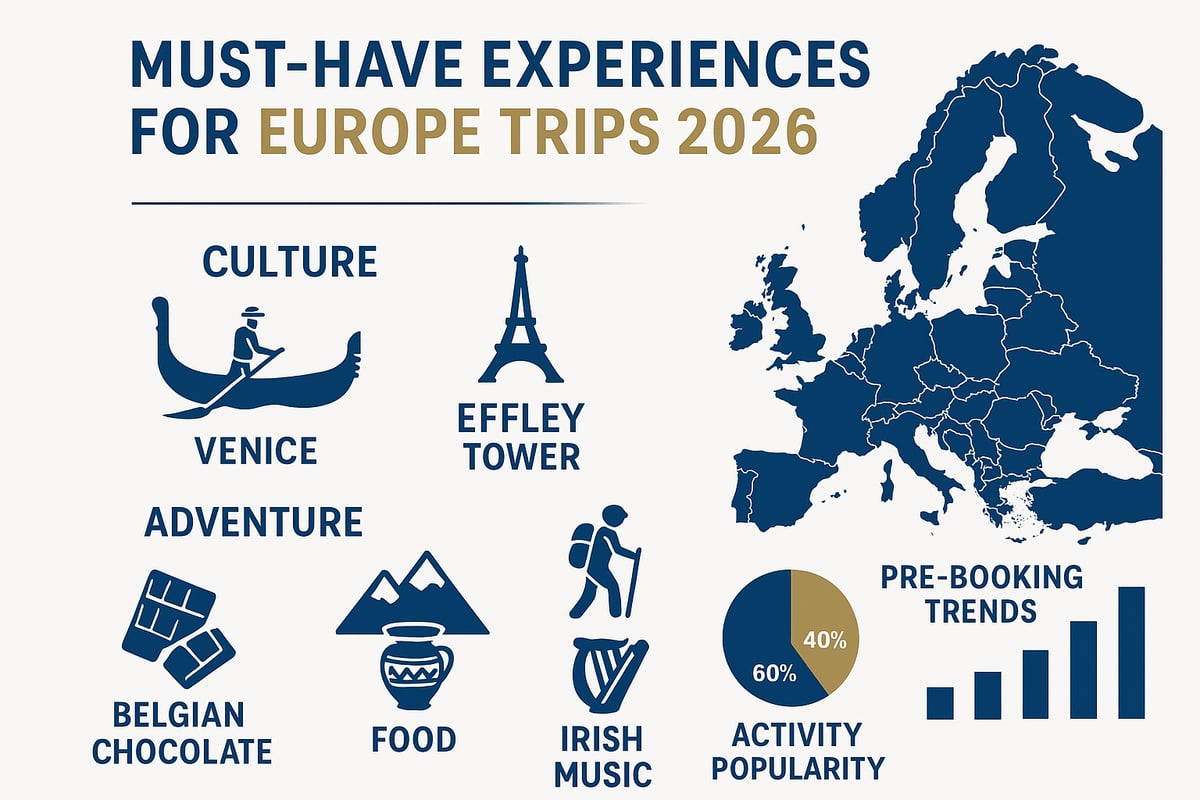
Certain activities define Europe trips for travelers around the world. Picture gliding along Venice’s canals in a gondola, taking in the city’s timeless romance. At the Eiffel Tower, sunset views over Paris create a magical backdrop for photos and memories.
In Rome, guided tours of the Colosseum bring ancient history to life. Exploring the Palace of Versailles, strolling through its manicured gardens, and witnessing the grandeur of French royalty are musts for any itinerary. These icons consistently rank among the top experiences on Europe trips, drawing millions each year.
| Country | Signature Activity | Why It’s Unmissable |
|---|---|---|
| Italy | Gondola ride in Venice | Unique perspective of Venetian life |
| France | Eiffel Tower at sunset | Iconic views, romantic atmosphere |
| Greece | Santorini caldera cruise | Breathtaking scenery, island charm |
Cultural Immersion and Local Flavor
Cultural immersion is a highlight of Europe trips, with hands-on experiences that connect travelers to local traditions. Join a pasta-making class in Rome, where chefs reveal family recipes passed down for generations. In Dublin, Irish music nights in cozy pubs pair traditional sounds with warm hospitality.
Wine tastings in Bordeaux or the Douro Valley introduce regional flavors and stories from local vintners. For food lovers, chocolate workshops in Belgium offer a delicious, interactive dive into Europe’s sweet heritage. These immersive moments are increasingly popular, reflecting a shift toward deeper, more meaningful Europe trips.
- Pasta-making in Rome
- Irish music and dance nights
- French wine tastings
- Belgian chocolate workshops
Nature and Adventure Escapes
Europe’s landscapes invite adventure seekers to discover natural wonders on their Europe trips. Hiking the Swiss Alps delivers panoramic mountain vistas and fresh alpine air. In Iceland, guided tours to waterfalls and geysers showcase otherworldly beauty.
Mediterranean beaches, from Greece to Spain, offer sun-soaked relaxation and crystal-clear waters. Sailing between the Greek islands or kayaking along Croatia’s coast provides an active way to explore diverse regions. These nature-focused experiences make Europe trips dynamic and memorable.
Unique Accommodations and Hands-On Workshops
Where you stay can be as memorable as the sights you see on Europe trips. Spend a night in an Irish castle, surrounded by history and lush countryside. Choose a boutique hotel in Paris or an alpine lodge in Switzerland for authentic local charm.
Workshops add a creative dimension to your journey. Try your hand at Greek pottery, join a Spanish flamenco dance class, or learn the art of French patisserie. These hands-on activities enrich Europe trips, helping travelers forge personal connections with each destination.
- Castle stays in Ireland
- Pottery classes in Greece
- Flamenco dance in Spain
- Patisserie workshops in France
Planning, Pre-Booking, and Traveler Stories
With demand for immersive activities at an all-time high, pre-booking signature experiences for Europe trips in 2026 is essential. Popular tours, such as the Versailles Palace and Gardens or Santorini caldera cruises, sell out months in advance.
Travelers often share stories of transformative moments, from tasting homemade limoncello on the Amalfi Coast to attending a Mozart dinner in Salzburg. These testimonials reflect the trend toward experiential travel, where memories matter more than souvenirs. Prioritizing must-have experiences ensures your Europe trips are truly unforgettable.
Essential Travel Tips and Trends for 2026 Europe Trips
Planning Europe trips in 2026 means staying ahead of evolving travel requirements, accommodation trends, safety practices, and budgeting strategies. Here are the latest insights to help you travel smarter and more confidently.
Navigating Europe’s Travel Landscape in 2026
Traveling across Europe in 2026 will be easier and more connected than ever, but staying informed is essential. Non-EU travelers should note the introduction of the European Union’s biometric Entry/Exit System (EES), which is set to be fully operational by April 2026. This system will use fingerprint and facial recognition at border crossings, streamlining entry for millions on Europe trips. Meanwhile, the ETIAS travel authorization has been delayed to 2027, so no application is needed for most non-EU visitors in 2026. For the latest updates, see ETIAS implementation delayed to 2027.
Currency use varies, most countries accept the euro, but the UK, Switzerland, and others have their own. Cashless payments are widely accepted. For transport, combine Eurail passes, budget airlines, and local transit for flexibility. Download travel apps for translations, tickets, and itinerary management to enhance your Europe trips experience.
Accommodation and Dining Insights
Europe trips now offer a broader range of lodging and culinary experiences than ever before. Choose from luxury hotels, boutique stays, hostels, or unique options like castles and eco-lodges. Experiential accommodations, such as farm stays and historic inns, are gaining popularity among travelers seeking something memorable.
Dining is an adventure in itself. Savor fresh street food, explore local markets, or indulge in Michelin-starred restaurants. All-inclusive packages are increasingly popular for those who want stress-free Europe trips, with meals, activities, and even drinks bundled in the price. This trend is especially strong among group travelers and those seeking convenience. Whether you prefer à la carte dining or full-board options, Europe’s culinary scene caters to every taste and budget.
Safety, Health, and Insurance
Prioritizing safety and health is vital for all Europe trips. Comprehensive travel insurance is highly recommended to cover medical emergencies, trip cancellations, and lost belongings. EU travelers can use the European Health Insurance Card (EHIC) for access to local clinics and emergency care, while others should carry proof of international coverage.
Stay alert in busy tourist zones, as pickpocketing remains a concern in major cities. Solo travelers, students, and groups benefit from guided tours that offer 24/7 support and peace-of-mind programs. Many providers now include dedicated safety briefings and local emergency contacts, adding an extra layer of assurance to your Europe trips. Always check local emergency numbers and health resources before departure.
Budgeting and Payment Strategies
Smart budgeting is key to maximizing your Europe trips in 2026. Create a clear budget for flights, accommodations, daily expenses, and activities. Many travelers are turning to payment plans and travel clubs to spread costs over time, making dream trips more accessible. For example, the $5/Day Travel Club for Europe offers a flexible way to save and pay gradually, removing financial barriers for many.
Book early to secure the best deals and take advantage of early-bird pricing, especially for all-inclusive group tours. These packages often include accommodations, meals, and activities in one transparent price, helping you avoid hidden fees. Compare options, read the fine print, and consider off-season travel for even greater savings on your Europe trips.
Europe Trip FAQs for 2026 Travelers
Planning Europe trips in 2026 raises important questions, especially with new trends and evolving regulations. Below, find answers to the most common concerns for making your journey seamless, memorable, and stress free.
What are the best months to visit Europe in 2026?
The ideal time for Europe trips is during the shoulder seasons: April to June and September to early November. These months offer pleasant weather, fewer crowds, and lower prices compared to the peak summer. If you prefer festivals or winter markets, consider December for a magical holiday experience.
How far in advance should I book my Europe trip?
Booking 6 to 9 months ahead is recommended, especially for guided tours or popular destinations. Early reservations often unlock better rates and greater itinerary choices. For summer or special event travel, even earlier planning is wise to secure accommodations and tours.
Are guided tours or independent travel better for first-timers?
Both options have advantages for Europe trips. Guided tours provide expert support, logistics, and curated activities, making them ideal for first-timers or those seeking convenience. Independent travel offers flexibility and a self-paced experience. Many travelers now use AI tools to plan custom itineraries, with 42% relying on AI tools revolutionizing travel planning in 2025.
What are the must-see cities and experiences for 2026?
Top cities include Paris, Rome, London, Barcelona, and Amsterdam. Signature experiences range from gondola rides in Venice to Irish music nights and Swiss Alps hikes. For 2026, look out for special festivals and anniversaries across Europe, adding unique value to your journey.
How do I manage visas and entry requirements with changing regulations?
Non-EU travelers should prepare for updated requirements, including the new European Union biometric Entry/Exit System (EES) launching in April 2026. This system will require fingerprint and facial scans at borders. Stay updated by reading about the EU’s new biometric Entry/Exit System. Always check your passport validity and any necessary visas for each country on your Europe trips.
What should I pack for a multi-country European trip?
Pack light, versatile clothing suitable for diverse climates. Essentials include comfortable shoes, adapters, a rain jacket, and copies of travel documents. Tailor your packing list to your activities, urban sightseeing, outdoor adventures, or cultural events.
How can I ensure my trip is sustainable and supports local communities?
Opt for train travel, eco-friendly accommodations, and locally owned tours. Support artisans and dine at local restaurants to make your Europe trips both enjoyable and impactful.
What are the best options for solo travelers or students?
Many providers now offer group tours designed for solo adventurers and students, fostering social connections and safety. Look for trips with small groups, educational elements, or themed experiences.
How do payment plans work for all-inclusive trips?
Most guided tour operators allow you to reserve a spot with a small deposit, often as low as $99, then pay in installments. This makes Europe trips more accessible and helps you budget with confidence.
Where can I find the latest travel deals and exclusive offers for 2026?
Monitor reputable tour providers, travel clubs, and official tourism boards. Early-bird promotions and last-minute deals are common, especially for all-inclusive and group Europe trips. Signing up for newsletters and following travel platforms can help you stay informed.
After exploring all the incredible destinations, planning tips, and unique experiences that Europe has to offer in 2026, you might be wondering what your next step should be. Whether you dream of castle stays in Ireland, hands on pasta making in Italy, or simply want a seamless, all inclusive journey, Atomic Trips takes care of every detail, accommodations, meals, guided tours, and immersive cultural activities. Ready to turn inspiration into action and start planning your unforgettable European adventure?
See Our Trips
and discover how easy it is to make your dream trip a reality.


