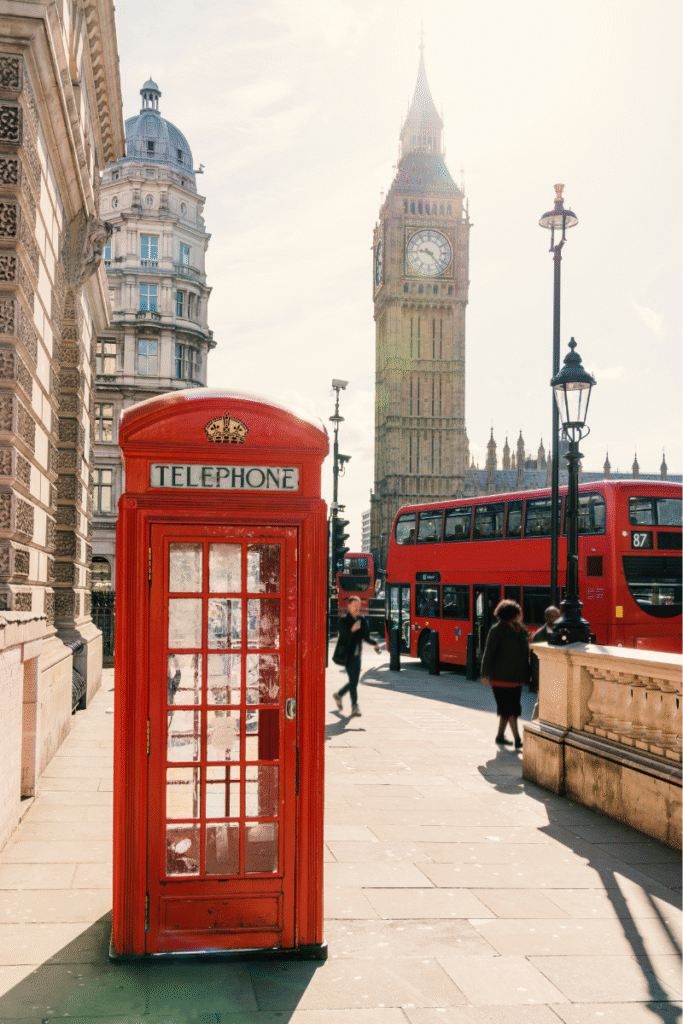
What makes Europe feel expensive right now
Most people think Europe is expensive because of flights. Flights are part of it, but they are not the whole story. While flights can be very expensive, many other expenses can be equally costly. Not to mention the currency exchange rates.
From what we see on the ground, the budget usually breaks down when travelers encounter these five categories.
1. Accommodation in high-demand neighborhoods
Accommodations in Paris, London, Rome, Dublin, and other major cities can get pricey fast if you choose hotels only because they’re “in the center.” The neighborhood premium is real.
2. Transportation you did not plan for
Airport transfers, taxis, buses, and last-minute train tickets when the usual options are unavailable are where many “small” costs tend to pile up. Rail and other transportation strikes have become more common across much of Europe, leaving travelers to find alternatives.
3. Food and drinks add up faster than people expect
The European Travel Commission reports that food and drinks are a top spending category for long-haul travelers. It makes sense. When you are exploring all day, you snack more, stop for coffee more, and sit down more often. One or two pints in Ireland can quickly turn into one or two more, and the same goes for the wine in Italy.
4. Attractions and timed tickets
If you are trying to see iconic sights, you will pay for entries, tours, and reservations. Even “free” attractions often have paid add-ons or premium access choices. And let’s be honest: a guided tour hits differently than going there by yourself, and those expensive experiences are often worth the extra cost for that once-in-a-lifetime moment. But those moments can add up.
5. New travel admin costs
I know what you’re thinking. You’re saying, “Travel admin costs? That’s vague. What does that mean?”
Here is an example: the UK requires an Electronic Travel Authorisation (ETA) for many travelers, and the official fee is £16. The U.S. Embassy has also published guidance that U.S. citizens need an ETA for short visits and most transit situations.
The EU is also rolling out the Entry-Exit System (EES), beginning operations as of October 12th, 2025, with a phased rollout over six months, which is leading up to the European Travel Information and Authorisation System, or ETIAS, which is expected to become operational in the fall of 2026, with an application fee set at EUR 20.
None of these fees are enormous, but they matter when you are trying to keep a truly affordable trip to Europe.
Is an all-inclusive group trip cheaper than DIY travel
Sometimes yes. Sometimes it is about the same financially.
Here is the honest way I explain it as a tour guide.
DIY travel can absolutely be cheaper if you:
- Stay farther out,
- cook or self-cater more often,
- avoid paid activities,
- and accept more planning time and more uncertainty.
But many travelers do not actually want that version of Europe.
A lot of people want mid-range hotels, multiple cities, landmark entries, and stress-free logistics. When you price that version honestly, DIY often comes close to what an Atomic Trip costs, except you do all the work and absorb all the risks.
That kind of curation is exactly why “bundled value” is trending. Expedia’s Unpack ’25 report described a new “All-Inclusive Era” where travelers are intentionally choosing experiences that reduce logistical headaches and make costs more predictable.
How Atomic Trips makes an affordable trip to Europe easier and even more affordable
Atomic Trips is an all-inclusive group travel company. Our job is to remove the cost surprises and the planning burden that can make Europe feel inaccessible. Here is the practical difference.
You get cost certainty upfront
When we build a trip, we are not just building a route. We are building a controlled budget.
All of our Atomic Trips itineraries include:
- accommodations for the full trip
- breakfast, lunch, and dinner
- ground transportation tied to the itinerary
- guided sightseeing and curated activities
- souvenir photos and video from the trip
- an in-person host and support team that meets you at arrival and stays with you throughout the trip
- a structured day-by-day plan, so you are not constantly making expensive last-minute decisions
You still book your own airfare, but we offer flight assistance, where a team member will provide you with flight options based on your location and the given criteria. Our flight assistance service is free, and our team always does its very best to find you a fair-priced flight. Rest assured, once you land, the trip is designed so you are not constantly paying for logistics you did not anticipate.
When it comes to souvenirs, minus a few surprises I will not spoil, you are on your own, and I hope you have more self-control than I do.
You get group buying power and relationships.
Because we book for groups and have built not just a partnership but a friendship with our vendors, we can lock in pricing and availability that a solo traveler cannot. That makes it easier for us to offer an all-inclusive, yet affordable trip to Europe without sacrificing the quality of the experience.
You get help from day one.
One of the most overlooked “costs” in travel? Time and stress.
Our team supports travelers from the day they sign up, helping answer questions, reduce uncertainty, and keep the plan simple. We even host group Zoom calls with Q&A sessions and more. That is a different model from a company that sells you a package and disappears until the first activity. You are not working with a huge corporation that will pass your concern on to some other department; the same people who are available to assist you online are often the same ones who are on the trip to help in person.
You can use the 5 Dollar Travel Club to make payments manageable.
The 5 Dollar Travel Club is a membership product created by Atomic Trips. It costs $5 one time to join and members can access trips with special pricing and payment plans.
Some trips can average about 5 dollars a day when payments are spread over time, depending on specific itineraries, dates, and payment schedules. Not every trip’s average is five dollars a day, and availability and terms can change. The point is flexibility and access, not a blanket promise.
If your goal is an affordable trip to Europe that doesn’t require debt or months of planning, this payment structure helps many people move from “someday” to “next week.”
How to plan an affordable trip to Europe on your own
Not everyone wants to be on a group trip. Many prefer their holiday abroad to be more solitary and are happy to plan it that way. Now, when it comes to saving costs when you plan your own affordable trip to Europe, it depends partially on your definition of affordable and also on your personal level of comfort and desire.
If you are going DIY, this is the approach I recommend.
Step 1: Decide what “affordable” means for you
Do you want:
- the cheapest possible trip,
- a mid-range trip with comfort,
- or a premium trip with only the best
You cannot make good cost decisions until you decide what you are optimizing for.
Step 2: Choose countries that connect well
You can affordably explore many destinations in Europe, but it is easier when your route is logical. For instance, you wouldn’t want to go from London to Amsterdam, then to Edinburgh, then to Paris. Instead, you would go from London to Edinburgh, then to Amsterdam, and finally to Paris, ensuring you optimize the region’s geography. (This is a massively broad example.)
A strong affordability rule is: fewer long travel days, fewer one-night hotel stays, and fewer last-minute transport decisions.
Step 3: Use official booking windows to your advantage
Train costs are one of the easiest places to lose money.
For France, SNCF notes that tickets are often sold about 4-5 months in advance under normal circumstances, with special sales openings for peak periods.
In the UK, National Rail specifically recommends booking Advance tickets to save money, as they are sold in limited quantities.
If you plan early, your affordable trip to Europe stays affordable. If you plan late, transport can eat your budget. This concept applies to flights as well.
How to save money in France in 2026
France can be surprisingly manageable if you avoid the “Paris only, central hotel only, and restaurant for every meal” trap.
Use detour cities to reduce costs.
Expedia’s Unpack report highlights “Detour Destinations” near famous hotspots, including Reims as a detour from Paris. You can still get the French magic while often paying less than central Paris rates. France has a lot to do and see. From Normandy to Marseille, you will find a little something for everyone without paying eyewatering prices.
Use trains strategically
Watch SNCF sales openings and book early when possible.
- Set a reminder on your phone or calendar to purchase tickets as soon as they are announced.
- Consider your route carefully; although it may take longer, a bus or regional train may be significantly cheaper.
- Check whether a day pass or a similar option may be more cost-effective than a one-time ticket.
- See if the company offers any sign-up or loyalty bonuses that could get you discounts on tickets or amenities.
- Download apps like Omio or Rome2Rio to find the best deal across platforms.
Consider a museum pass if you are doing heavy sightseeing.
The Paris Museum Pass provides access to more than 50 museums and monuments and activates on your first use for a set number of hours, depending on the pass length.
This is not automatically “cheaper.” It is cheaper only if you actually plan to use it enough. But for travelers doing multiple major sites, it can protect your budget from death by ticket fees.
How to save money in Belgium in 2026
Belgium is one of my favorite “value meets beauty” destinations, and it can really support an affordable trip to Europe.
Use free museum days in Brussels.
Visit Brussels lists museums that are free on the first Sunday of the month, which is one of the simplest budget wins in the city.
Brussels Museums also maintains guidance on free museum options and timing.
Use Belgium as a base for day trips.
Staying in Brussels and then going to Bruges, Ghent, and Antwerp can be done efficiently, reducing hotel hopping and keeping your trip calmer.
How to save money in Italy in 2026
Italy can be either a bargain or a budget destroyer. The difference is usually timing and tickets.
Use official free museum days.
Italy’s Ministry of Culture runs “Domenica al Museo,” which provides free entry to state cultural sites on the first Sunday of the month, with reservations recommended or required in some cases.
Use detour cities to cut costs.
Expedia’s detour list includes Brescia as a detour from Milan. This is the same concept as in France: you get a strong Italian experience without paying peak pricing in the most saturated center zones. See the wonders of Rome, of course, but drive to the countryside, explore small villages and towns, and get a little lost. Not only will it save you some money, but you will gain cherished memories.
How to save money in Ireland in 2026
Ireland is not the cheapest country in Europe, but it can still be a smart choice if you play it right.
Prioritize free national museums.
The National Museum of Ireland states clearly that admission is free. For any fellow archaeologists or enthusiasts alike, this is a true treasure!
Reduce hotel switching
Stay outside Dublin Central (or Dublin altogether) and try to minimize one-night stays. Dublin is an expensive city, and hotel hopping increases transport costs and complexity.
Consider traveling outside peak summer.
Off-season and shoulder-season planning often reduces costs and crowds, making iconic sites feel far less stressful. Just pack your rain jacket.
How to save money in the UK in 2026
The UK can be pricey, but it also offers some of the best “free culture” value in Europe. Strolling down the historic Thames along The Queen’s Walk and gazing up at the iconic Tower Bridge or across Westminster Bridge in the shadow of the iconic Big Ben is a truly surreal experience. And it won’t cost you any admission!
Use free-entry museums
The National Gallery offers free general admission, and you can book a free ticket for faster entry.
Visit London also highlights major free museums and confirms free access to permanent collections at many institutions.
Use rail discounts the right way.
National Rail notes that Advance tickets are cheaper when booked in advance (hence the name) and are only valid for the specific train you book.
Railcards can also save up to one-third, depending on eligibility and rules.
Budget for the UK ETA
If you are visiting the UK, budget for the ETA cost, currently £16, and apply through the official site to avoid third-party upcharges.