


Picture yourself savoring creamy gelato in Rome, gliding through Venice’s storied canals, and exploring Tuscany’s rolling hills, all while every detail is expertly handled for you. Planning an all inclusive trip to Italy in 2026 means you can immerse yourself in breathtaking sights and rich culture without a single worry about logistics.
This guide will walk you through everything you need to know, from what “all inclusive” really covers in Italy to the best destinations, how to select the right package, and essential travel tips. Ready to experience Italy with total peace of mind? Start planning your unforgettable adventure now.
What Does an All-Inclusive Trip to Italy Include?
Imagine arriving in Italy with every detail already taken care of, hotels, meals, guided tours, and transfers all seamlessly arranged. An all inclusive trip to Italy offers this level of comfort, letting you focus on discovery rather than logistics. But what exactly does “all-inclusive” mean in the Italian travel context, and how do you choose the right package for your journey?
Defining “All-Inclusive” in the Italian Context
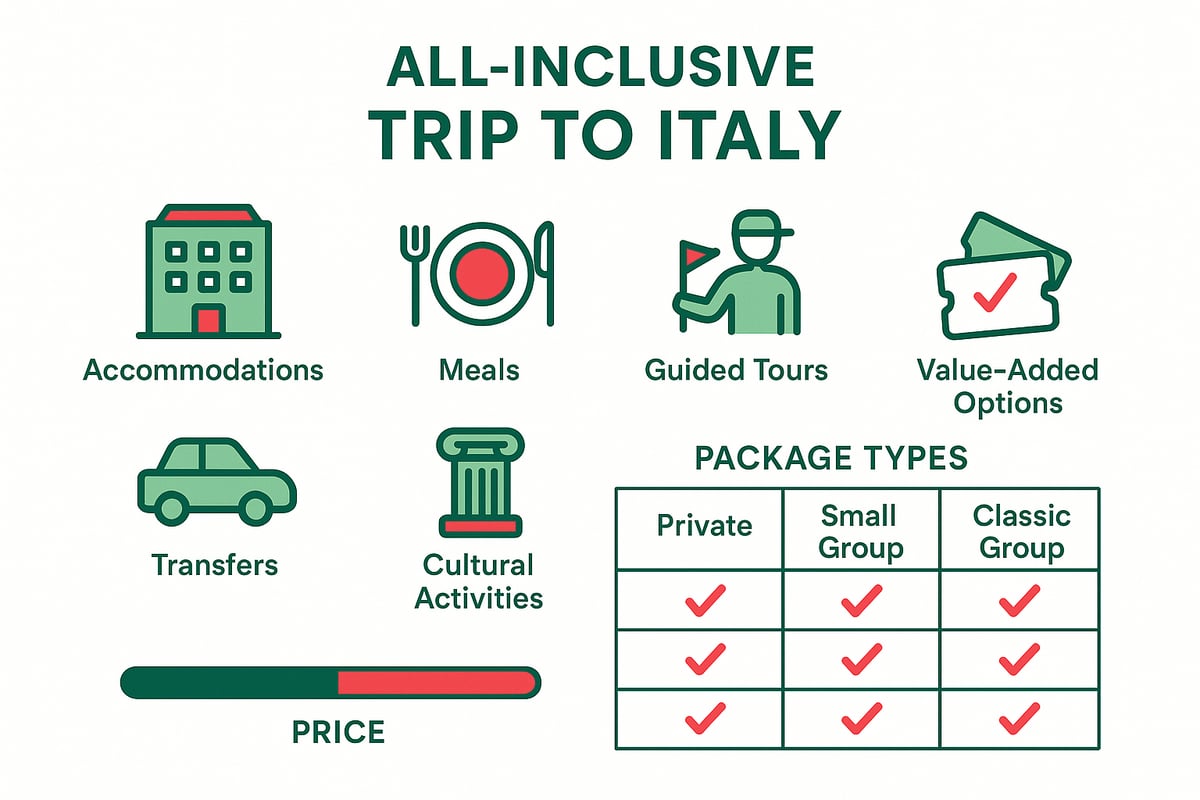
The term “all inclusive trip to Italy” typically covers a comprehensive set of travel essentials. Most packages include accommodations in centrally located hotels, daily breakfast (and often other meals), guided sightseeing tours, scheduled transfers between cities, and a variety of cultural activities.
Here’s a quick overview of standard inclusions:
| Feature | Included in Most Packages? |
|---|---|
| Accommodations | ✔ |
| Daily Breakfast | ✔ |
| Some Lunches/Dinners | ✔ (varies) |
| Guided Tours | ✔ |
| Transfers | ✔ |
| Cultural Activities | ✔ |
| Optional Excursions | ✗ (extra fee) |
| Flights | ✗ |
| Personal Expenses | ✗ |
While inclusions are broad, flights to and from Italy, personal purchases, and optional excursions are usually not part of the base package. For a detailed explanation of what to expect, see What is an all-inclusive trip to Europe.
The main benefit of an all inclusive trip to Italy is transparency: you know upfront what’s covered, making it easier to budget and avoid hidden costs. Packages often feature skip-the-line access at top attractions, English-speaking guides, and unique local experiences. Popular itineraries include Venice, Florence, Rome, the Amalfi Coast, and Sicily, with durations ranging from 7 to 17 days.
Differences Between Package Types
There are several types of all inclusive trip to Italy packages, each offering a different level of personalization and group size.
- Private Tours: Perfect for couples, families, or small groups wanting flexibility and exclusivity. Travel at your own pace, with a dedicated guide and custom itinerary.
- Small Group Packages: Typically 8–18 travelers. These balance social interaction with personal attention, making them ideal for solo travelers or those seeking a community feel.
- Classic Group Tours: Larger groups, usually 20–40 guests. These tours are more budget-friendly and offer a set itinerary, with less customization.
Here’s a quick comparison:
| Package Type | Group Size | Customization | Price Range (7–17 days) |
|---|---|---|---|
| Private | 2–8 | High | €5,200–€7,300 |
| Small Group | 8–18 | Moderate | €3,800–€6,500 |
| Classic Group | 20–40 | Low | €3,200–€5,500 |
Choosing the right all inclusive trip to Italy package depends on your travel style, desired level of interaction, and budget. Classic group tours are great for first-timers, while private and small group options suit travelers seeking more tailored experiences.
Customization and Value-Added Features
One of the most attractive aspects of an all inclusive trip to Italy is the range of customization options and added perks. Many operators allow you to tailor your itinerary, whether you want to focus on food, art, adventure, or family-friendly activities.
Common customization features include:
- Themed itineraries: culinary tours, wine tastings, art history, or outdoor adventures.
- Add-on excursions: extra nights in Rome, day trips to Capri, guided hikes in the Dolomites.
- Hotel upgrades: move from standard 3-star to boutique or luxury 4-star/5-star properties.
- Flexible meal plans: vegetarian, gluten-free, or premium dining options.
Value-added benefits often include skip-the-line tickets for major attractions, evening cultural events (opera nights, wine tastings), and professional English-speaking guides. Many packages also offer airport transfers and 24/7 local support, ensuring peace of mind throughout your journey.
With these features, an all inclusive trip to Italy transforms a standard vacation into a seamless, immersive adventure. Whether you’re celebrating a milestone, traveling with family, or indulging a special interest, the right package ensures every detail is covered, so you can enjoy Italy to the fullest.
Top Destinations & Experiences on an All-Inclusive Italy Adventure
Imagine arriving in Italy and stepping into a world where every detail is curated for you. An all inclusive trip to Italy is not just about ticking off famous sites, but immersing yourself in the culture, flavors, and landscapes that make the country unique. Let’s explore the destinations and experiences that define the ultimate Italian adventure.
Classic Cities and Must-See Sights
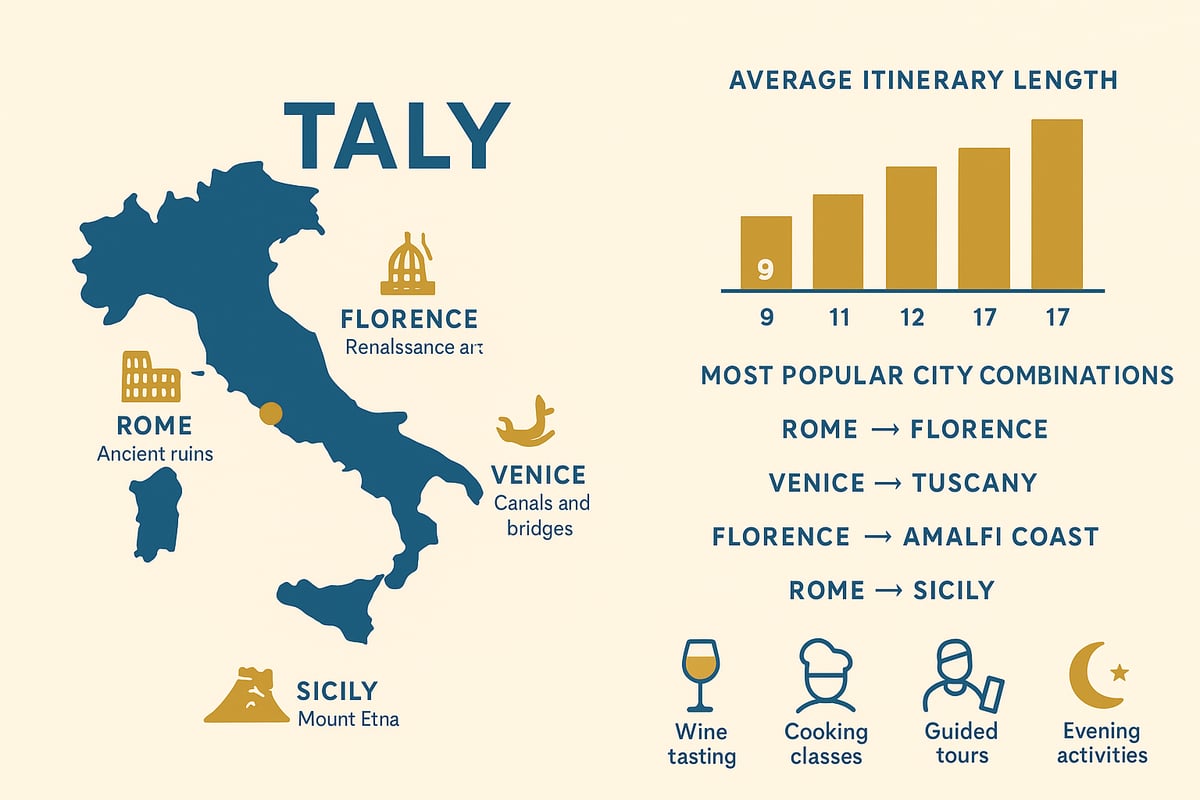
Italy’s most iconic cities are the foundation of any all inclusive trip to Italy. Rome captivates with the Colosseum, Vatican Museums, and the lively Trastevere district. Florence enchants with Renaissance treasures at the Uffizi Gallery, the striking Duomo, and artisan workshops. Venice is a maze of canals, where you can marvel at St. Mark’s Basilica, glide in a gondola, and watch glassmakers in Murano.
Head south to the sun-soaked Amalfi Coast, where Sorrento’s lemon groves and Positano’s cliffside villages offer postcard-perfect views. In Sicily, explore Palermo’s vibrant markets, ancient ruins in Agrigento, and the seaside charm of Taormina. Tuscany rounds out the journey with rolling vineyards, medieval towns like San Gimignano, and hands-on culinary experiences.
Travelers on an all inclusive trip to Italy often visit 3 to 7 cities in 9 to 17 days, maximizing variety while minimizing hassle. Centrally located hotels, expert guides, and seamless transfers make exploring these regions effortless.
Here’s a quick comparison of top city highlights:
| City | Must-See Sights | Unique Experience |
|---|---|---|
| Rome | Colosseum, Vatican, Trevi | Pasta-making class |
| Florence | Uffizi, Duomo, Oltrarno | Artisan workshop visit |
| Venice | St. Mark’s, Rialto, Murano | Gondola ride |
| Amalfi | Positano, Sorrento, Ravello | Limoncello tasting |
| Sicily | Palermo, Taormina, Agrigento | Street food tour |
| Tuscany | Siena, Chianti, San Gimignano | Wine tasting |
Unique Experiences Included in Packages
Beyond sightseeing, an all inclusive trip to Italy includes curated experiences to connect you with local culture. Guided museum visits, such as the Accademia in Florence or the Vatican Museums in Rome, provide skip-the-line access and expert insights.
Food and wine are central to Italian life. Packages often feature tastings at Tuscan wineries, hands-on cooking classes, and market visits where you meet local producers. Evening activities might include opera performances, sunset cruises in Venice, or wine tastings overlooking the countryside.
Cultural immersions are another highlight. Watch artisans craft leather in Florence or glass in Murano. Visit bustling markets in Palermo and sample regional specialties. For those seeking adventure, optional excursions like hiking in the Dolomites or private coastal boat tours are available.
These experiences ensure your all inclusive trip to Italy is more than a checklist, it’s a deep dive into the traditions and lifestyles of each region. Many packages also offer private transfers, evening events, and English-speaking guides as standard features, ensuring comfort and enrichment at every turn.
Sample Itineraries and Themed Tours
Choosing the right route and theme is key for a memorable all inclusive trip to Italy. Classic itineraries often follow the Venice–Florence–Rome route, with extensions to the Amalfi Coast or Sicily for a broader perspective. Itineraries typically last from 9 to 17 days, balancing city exploration with relaxation.
Families might opt for packages with interactive museum visits and kid-friendly food tours. Couples can enjoy romantic gondola rides, wine tastings, and sunset dinners. Foodies will delight in itineraries centered around market tours and cooking classes. Private tours offer personalized pacing and exclusive access, while small group tours foster camaraderie and shared discovery.
For inspiration, explore the 11-day Italy vacation packages to see how an expertly crafted itinerary blends the best of each region. Comparing small group and private options reveals differences in flexibility, group size, and included activities.
No matter your travel style, an all inclusive trip to Italy can be tailored to your interests, ensuring every day delivers new discoveries and unforgettable moments.
How to Choose the Best All-Inclusive Italy Package for 2026
Planning an all inclusive trip to Italy requires careful consideration to ensure your journey matches your expectations and travel style. With so many packages available for 2026, understanding what to look for will help you find the perfect Italian adventure.
Key Factors to Consider
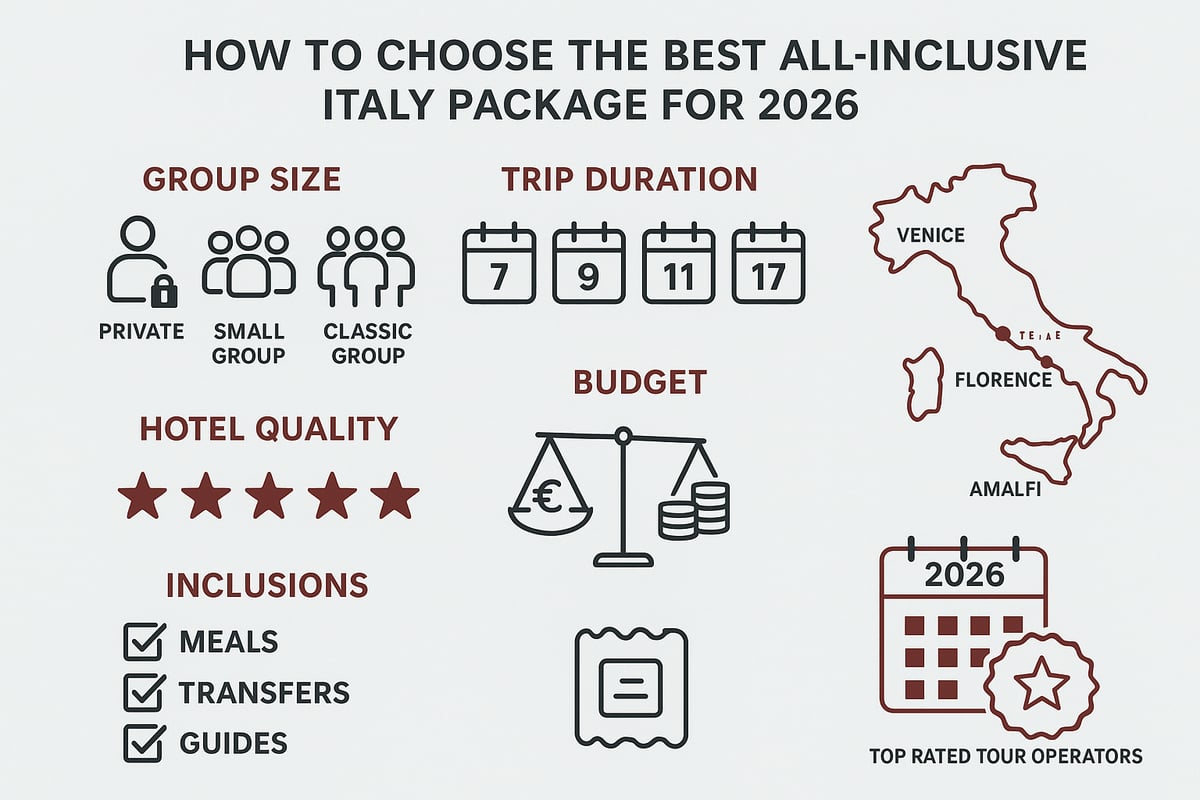
When selecting an all inclusive trip to Italy, begin by evaluating your preferred group size. Private tours offer exclusivity and flexibility, small groups provide a balance of social interaction and personal space, while classic group tours often deliver the best value for larger parties.
| Package Type | Group Size | Pros | Cons |
|---|---|---|---|
| Private | 1–6 travelers | Fully customized, privacy, flexible | Higher cost |
| Small Group | 7–18 travelers | Social, curated experiences, good value | Less flexibility |
| Classic Group | 20+ travelers | Most affordable, set itinerary | Crowded, less personal |
Next, consider the duration of your all inclusive trip to Italy. Packages range from 7 to 17 days. Shorter tours (7–9 days) cover highlights, while longer options (11–17 days) allow for in-depth exploration and added destinations like Sicily or the Amalfi Coast.
Budget is another key factor. Packages typically range from €3,200 to €7,300, depending on inclusions, hotel standards, and duration. Decide if you want 3-star comfort, 4-star luxury, or boutique hotels. Standard inclusions often feature centrally located hotels, daily breakfasts, guided tours, transfers, and skip-the-line access to top attractions.
Look for value-added features such as themed itineraries (food, history, adventure), hands-on experiences, and the ability to customize. Families, couples, and solo travelers should confirm flexibility for extra nights, upgrades, or specific interests.
For example, compare a 9-day Venice–Florence–Rome tour with an 11-day option including the Amalfi Coast. The longer trip may offer coastal drives and culinary experiences, while the shorter one focuses on Italy’s classic cities. Weigh the pros and cons based on your priorities and travel pace.
Where to Book and What to Look For
Choosing the right provider is essential for a seamless all inclusive trip to Italy. Start with tour operators specializing in Italian travel, as they offer deep local expertise and refined itineraries. Check for companies with high client ratings (such as an average of 4.9 out of 5 from over 1,000 reviews) to ensure consistent quality and service.
Transparent pricing is crucial. Make sure there are no hidden fees and that all inclusions are clearly listed. Early booking for 2026 is highly recommended, especially if you plan to travel during festivals or the busy spring and fall seasons.
Look for flexible payment plans, fair cancellation policies, and responsive customer support. Reading recent traveler testimonials can provide valuable insights into the real experience. When comparing options, focus on what is included, guided tours, transfers, meals, and exclusive activities, rather than only the price.
If you want a curated list of the top packages, Best all-inclusive Italy deals 2026 highlights highly rated options tailored for different interests and budgets.
By carefully weighing these factors, you can confidently choose the all inclusive trip to Italy that aligns with your dream vacation and ensures an exceptional Italian journey.
Step-by-Step Guide: Planning Your All-Inclusive Italian Adventure
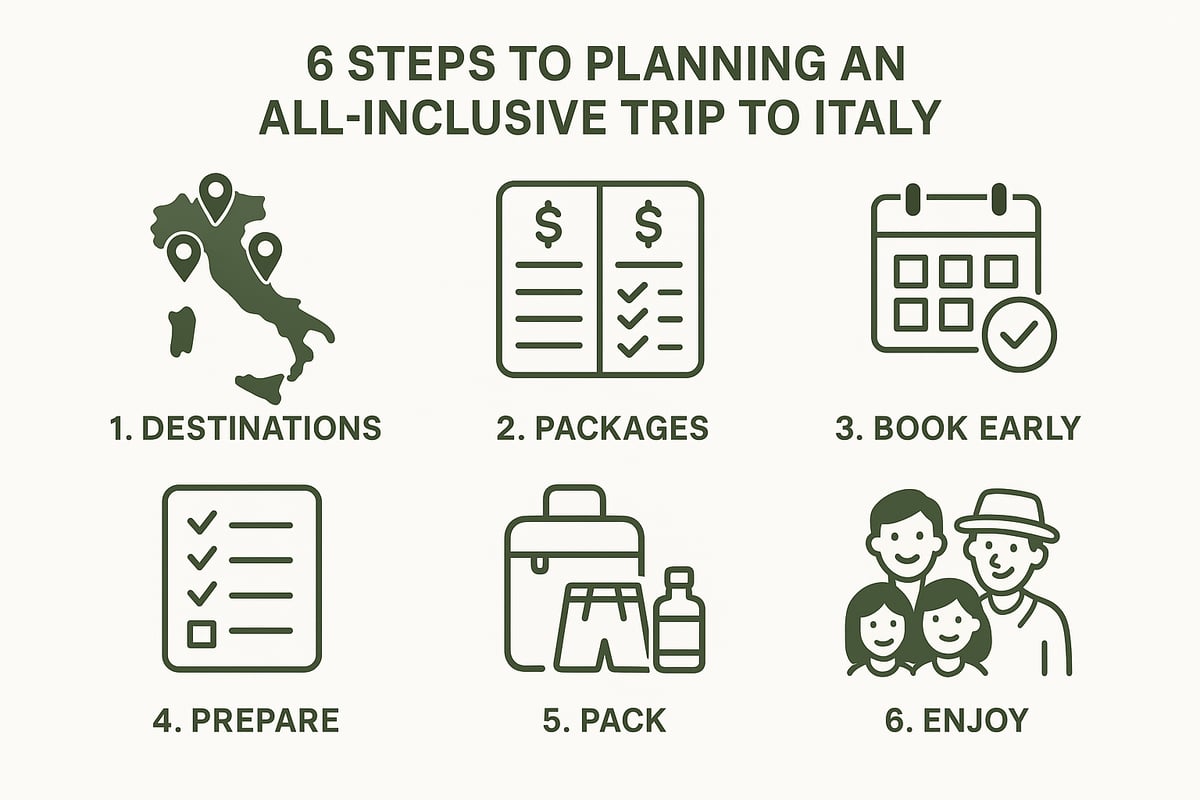
Planning an all inclusive trip to Italy can seem overwhelming at first. By breaking it down into manageable steps, you will ensure a seamless, enjoyable journey. Follow this guide to cover every detail, from choosing destinations to embracing authentic Italian experiences.
Step 1: Set Your Travel Goals and Preferences
Begin your all inclusive trip to Italy by deciding what you want to experience. List must-see cities, such as Rome, Florence, or Venice, and identify your interests, whether it is art, food, or adventure. Determine if you prefer private, group, or themed tours for a tailored experience.
Consider the best time to visit for your plans. Spring and fall are ideal for mild weather and fewer crowds. For detailed guidance on the best times and seasonal highlights, consult the Italy Travel Planning Guide 2026. Early clarity on your preferences will help you find the perfect package.
Step 2: Research and Compare Packages
Explore reputable tour operator websites to find the right all inclusive trip to Italy. Compare inclusions, such as centrally located hotels, guided tours, and transfers. Check for value-added features like skip-the-line tickets or unique excursions.
Read reviews to gauge quality and transparency. Create a shortlist based on what matters most to you. Use comparison tables or lists to evaluate pricing, duration, and flexibility. This step ensures you choose a package that matches your travel style and goals.
Step 3: Book Early and Secure Your Spot
Once you select your preferred all inclusive trip to Italy, book as early as possible. The best packages fill up quickly, especially for peak seasons and festivals. Aim to reserve your spot 6 to 12 months in advance.
Look for flexible payment plans and early bird discounts. Review deposit, cancellation, and refund policies before committing. Booking early not only provides peace of mind but also secures the best rates and availability for your Italian adventure.
Step 4: Prepare for Your Trip
Proper preparation is crucial for a smooth all inclusive trip to Italy. Make sure your passport is valid for at least six months beyond your travel dates. Check visa requirements for your nationality and arrange any necessary documents.
Purchase comprehensive travel insurance covering medical emergencies, cancellations, and lost belongings. Familiarize yourself with health and safety recommendations, like required vaccinations and emergency contacts. Preparation minimizes stress and helps you focus on enjoying your trip.
Step 5: Pack Smart and Get Ready
Packing efficiently is key for any all inclusive trip to Italy. Bring weather-appropriate clothing in layers, comfortable walking shoes, and accessories like sunglasses and umbrellas. Do not forget European plug adapters and a secure day pack for excursions.
Include essentials such as travel documents, local currency (Euro), and a list of important contacts. Brush up on local customs, like respectful attire for churches and tipping etiquette. Smart packing ensures comfort and helps you blend in with locals.
Step 6: Enjoy a Seamless, Worry-Free Experience
On arrival, meet your guide and group at the designated spot to start your all inclusive trip to Italy. Take advantage of curated experiences, included meals, and exclusive excursions. Engage with your guide for local insights and recommendations.
Stay flexible for optional activities or downtime as needed. Trust the itinerary but allow room for spontaneous moments. With careful planning, you will enjoy every moment of your Italian journey, free from logistical worries.
Essential Travel Tips for Your 2026 All-Inclusive Italy Trip
Preparing for your all inclusive trip to Italy means more than booking a package. Knowing what to expect, how to pack, and how to navigate Italian customs ensures a smooth, enjoyable journey. Use these essential tips to maximize your experience and travel with confidence.
Timing and Weather
Italy’s climate varies from north to south, so timing is key for your all inclusive trip to Italy. Summers (June to August) are hot and dry, especially in the south and coastal areas. Winters (December to February) can be cool and rainy, particularly in the north and inland regions.
The best months to plan your all inclusive trip to Italy are April to June and September to October. These periods offer mild weather, fewer crowds, and vibrant landscapes. Coastal regions like the Amalfi Coast enjoy warm breezes, while cities such as Rome and Florence are pleasant for sightseeing. Always check local forecasts before departure.
Packing and Preparation
Packing smart is essential for an all inclusive trip to Italy. Bring layers to adapt to changing temperatures, sunscreen for sunny days, and a compact umbrella just in case. Comfortable walking shoes are a must for cobblestone streets and day tours.
Respect Italian dress codes, especially when visiting churches or upscale restaurants, shoulders and knees should be covered. Brush up on local customs, such as greeting people with a friendly “buongiorno” and tipping up to 10 percent if you wish. For more advice, see these travel tips and tricks for Italy.
Money and Safety
The euro is the only accepted currency for your all inclusive trip to Italy. While credit cards are widely used in cities and larger towns, it is wise to carry some cash for small purchases, markets, or rural areas.
Be mindful of pickpocketing hotspots, especially in crowded tourist sites and on public transport. Keep valuables secure and use a crossbody bag. Emergency numbers in Italy include 112 for police and 118 for medical assistance. ATMs are easy to find in cities, but notify your bank before travel to avoid card issues.
Food & Drink Insights
Food is a highlight of any all inclusive trip to Italy. Savor regional specialties in each destination, from Roman carbonara to Sicilian cannoli. Do not miss authentic gelato or the local espresso culture.
Vegetarian and gluten-free options are increasingly available, but always inform your guide of dietary restrictions in advance. Tap water is safe to drink in most Italian cities, and you will often find public fountains for refilling bottles. Enjoy meals at a leisurely pace, as Italians value the social side of dining.
Frequently Asked Questions About All-Inclusive Italy Packages
Planning an all inclusive trip to Italy brings up plenty of questions, especially if it is your first time considering a comprehensive package. Here, we answer the most common queries travelers have, helping you book and prepare for your 2026 adventure with confidence.
Are flights included in an all inclusive trip to Italy?
Usually, international flights are not part of standard packages. Most all inclusive trip to Italy offers focus on land arrangements like hotels, meals, tours, and transfers within Italy. However, some premium operators may offer flight add-ons or assistance with booking. Always check the package details before confirming. For a broader perspective on what is commonly included, explore the Package Holidays Market Forecast Italy.
Can dietary restrictions be accommodated?
Yes, reputable providers of an all inclusive trip to Italy will ask about food allergies or dietary needs. Vegetarian, vegan, gluten free, or other requirements can usually be met with advance notice. It is best to communicate your preferences early, ideally when booking, to ensure seamless dining experiences throughout your journey.
Is travel insurance required, and how much free time is there?
While not always mandatory, travel insurance is strongly advised for any all inclusive trip to Italy. It protects you in case of unexpected events, medical emergencies, or trip changes. Most packages include a healthy balance of guided activities and free time for personal exploration, shopping, or relaxation. Check the daily itinerary for details on scheduled versus independent time.
Who are these trips suitable for, and how far in advance should I book?
An all inclusive trip to Italy is designed for a wide range of travelers: families, couples, friends, and solo adventurers. Group sizes vary, with small group tours averaging 10–18 guests, while private tours offer maximum flexibility. Booking 9–12 months ahead is recommended, especially for 2026 departures. For expert tips on timing and preparation, watch Italy: The ESSENTIAL Planning Guide for 2026.
What if there is an emergency during my trip?
All major operators provide 24/7 local support and emergency contact numbers as part of your all inclusive trip to Italy. Guides are trained to assist with medical issues, lost documents, or other urgent needs, so you can travel with peace of mind.
As you think about your dream Italian adventure in 2026, whether it’s sampling Tuscan wines, marveling at Roman landmarks, or gliding through Venetian canals, the real magic happens when every detail is expertly handled for you. With Atomic Trips, you can immerse yourself in Italy’s culture and beauty without worrying about logistics or hidden costs. If you’re ready to take the next step and discover how an all inclusive trip can be truly stress free and unforgettable, I invite you to Book a Discovery Call and start planning your Italian journey with confidence.


